
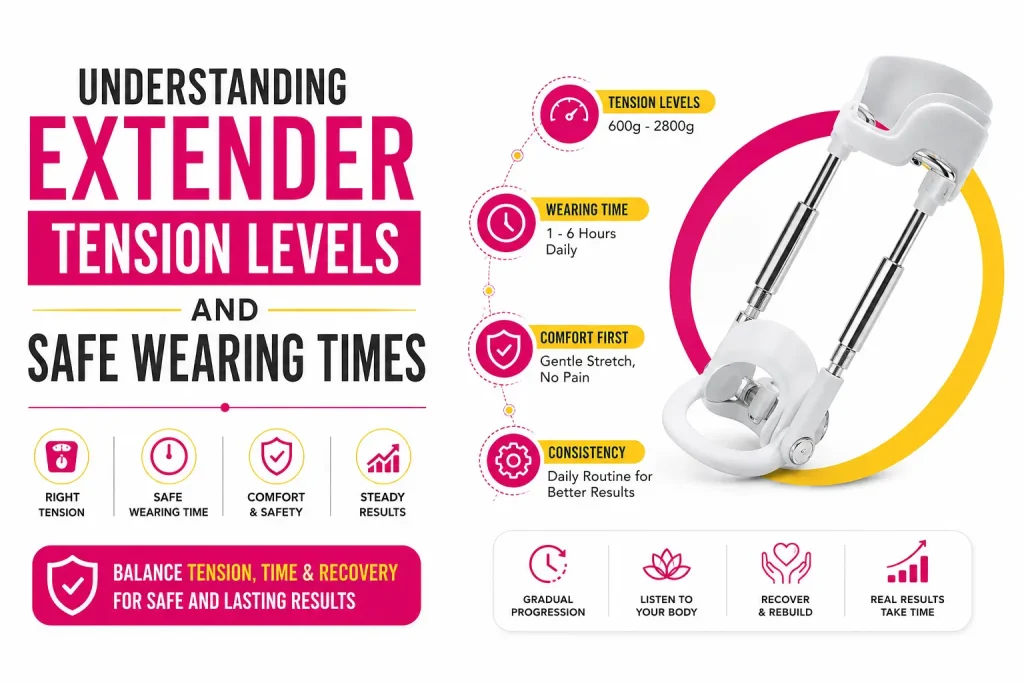
Using an extender is not about pushing limits. It is about creating a steady, gentle stretch that allows natural tissue expansion over time. Many users make the mistake of thinking higher tension means faster results. That belief often leads to discomfort, fatigue, or even injury. The key to getting good results lies in understanding how tension works and how long to wear the device safely each day.
This guide breaks down the relationship between tension and time. You will learn how extenders use traction, how to identify the right pressure for your body, and how to build a safe, effective schedule that gives results without risk.
What Tension Means in Extender Devices
In simple terms, tension is the amount of pulling force an extender applies to the penile tissue. It is measured in grams and usually ranges between 600 g and 2800 g depending on the device. Most extenders have adjustable rods or calibrated springs that let you control this level manually.
When a mild and consistent stretch is applied, it triggers cellular division. The body interprets this as a need for adaptation and slowly begins to rebuild and multiply tissue cells in that region. This biological process, known as mechanotransduction, is how extenders gradually increase length and sometimes girth.
The important part to remember is that traction must always be gentle and consistent. Your body grows through adaptation, not strain. Think of it like building strength at the gym. You start light and increase intensity only when your body can handle it.
Why High Tension Is Not the Shortcut It Seems
The human body reacts negatively to stress that exceeds its threshold. In extender use, too much tension causes microtears, swelling, bruising, and numbness. Many beginners assume that if a little pressure works, more will work faster. That is not true.
When you apply excessive pull, the tissues cannot adjust properly. Instead of stimulating growth, you create inflammation and restrict blood flow. This may delay healing and set your progress back weeks.
The best results come from finding a comfortable stretch—something you can wear for hours without pain, tingling, or cold sensations. If your device feels like it is cutting off circulation, your tension is too high.
The Ideal Starting Point for Beginners
If you are new to extenders, start small. Most experts recommend beginning at 600–900 g of tension for the first two weeks. This level provides enough pull to start the adaptive process without stressing the tissue.
At this stage, your goal is to build tolerance rather than chase growth. Wear the extender for one to two hours per day, split into shorter sessions if necessary. Check for redness or soreness after each use. Any pain or discoloration means you need to reduce tension immediately.
Gradual adaptation is what allows you to move up safely. Once your body feels comfortable with a mild pull, you can begin to increase tension in small steps.
Building a Safe Tension Progression
After the first two weeks, your tissues become accustomed to light traction. This is when you can start increasing tension slightly.
Here’s a sample progression pattern many users find safe and effective:
Weeks 1–2: 600–900 g tension, 1–2 hours daily
Weeks 3–4: 900–1200 g tension, 2–3 hours daily
Month 2: 1200–1500 g tension, 3–4 hours daily
Month 3: 1500–1800 g tension, 4–5 hours daily
Beyond Month 3: Gradually reach 2000–2300 g only if you experience no pain or irritation
These numbers are approximate. Every device and every body is different. Listen to how yours responds. The goal is not to reach the highest setting but to maintain sustained traction without discomfort.
A safe increase should feel like a firm pull, not a sharp tug. If your skin feels tight or sore, lower the pressure. Healing time and comfort always come before numbers.
Why Wearing Time Matters as Much as Tension
Tension gets the attention, but time under tension is what drives results. The extender works by keeping the tissue in a stretched state long enough for adaptation to occur. Using low tension for longer hours gives better results than using high tension for short bursts.
Most experienced users aim for 4 to 6 hours a day after the first month. You can break it into two or three sessions depending on your schedule. Consistency matters more than intensity. Missing days or rushing progress often leads to frustration.
Think of it like training for endurance. You are conditioning your body, not forcing it. The more consistent and comfortable your wear time, the better your results over the months ahead.
How to Tell When the Extender Tension levels Is Right
It takes a few days to learn what the right level feels like. The correct tension should feel like a steady stretch, not pain. You should be able to move, sit, or stand without needing constant adjustment.
Here are signs that your tension is correct:
- Mild pulling sensation without pain
- Warmth and natural blood flow maintained
- No numbness or color change
- No discomfort during short movements
And here are signs that you need to reduce tension:
- Sharp or burning pain
- Coldness or pale color in the glans
- Tingling or loss of sensation
- Visible redness or irritation
If any of the second group happens, remove the device and rest for 24–48 hours. Resume only after the area feels completely normal again.
Balancing Tension, Time, and Recovery
Even though extenders are noninvasive, they still require recovery time. The tissue needs rest to rebuild and grow stronger. That is why taking short breaks between sessions is important.
A safe rhythm might look like this:
- 60–90 minutes of wear
- 10–15 minute break for massage and circulation
- Repeat the session
This cycle allows fresh blood flow to reach the area, which promotes healing and reduces strain. Avoid sleeping with the device on or wearing it during workouts. Your body needs natural movement and rest to recover properly.
The Role of Comfort Systems
Modern extenders come with different support systems such as silicone straps, foam padding, or vacuum-style heads. These features make a big difference in how much tension you can safely handle.
If your device feels uncomfortable even at low settings, it may not fit your anatomy well. In that case, look for accessories like comfort pads or wider straps. They distribute pressure evenly and prevent hot spots that cause irritation.
Remember, comfort is not a luxury in extender use. It is what keeps you consistent. The more comfortable your device feels, the easier it becomes to wear it long enough to see results.
What Happens If You Overdo It
Pushing limits does not mean faster progress. It often leads to swelling, soreness, or minor tissue damage. In some cases, users develop edema or temporary nerve sensitivity. These side effects usually fade with rest, but repeated overuse can cause lasting issues.
If you ever notice bruising or persistent pain, stop immediately. Give yourself a full recovery period before resuming. If symptoms do not improve within a few days, seek medical advice. Proper care early prevents complications later.
Long-Term Safety and Realistic Results
Extenders are designed for gradual improvement. Most men notice measurable gains after three to six months of consistent, safe use. The process is slow, but the results are natural and long-lasting.
Staying patient is key. The combination of moderate tension, daily wear, and rest days gives your body the best chance to adapt safely. Trying to rush the process with higher tension or longer sessions only increases the risk of injury.
Safe progress is steady progress.
Final Thoughts
Understanding tension levels and safe wearing times is the foundation of successful extender use. Treat the device like a training tool, not a race. Start light, track your comfort, and increase tension only when your body feels ready.
If you focus on gradual traction, proper recovery, and daily consistency, your results will come naturally. The real power of an extender lies not in how strong it pulls, but in how smartly you use it.
Comfort, patience, and awareness always win over shortcuts.